 Video 1
 Tableau 2025.1 Features | Release Overview | See Timestamps
Tableau 2025.1 is here, and a lot of it is already live as a rolling release, so let's go through every feature and the ones I'm still cautious about.
 Databricks
 Databricks is the lakehouse platform: Spark-powered engineering, warehousing, governance and AI on one set of open tables. Where data engineering and analytics finally share a roof.
A lakehouse platform where large-scale data engineering, analytics and AI all run on one governed foundation.
The platform is broad. These are the six pieces an analyst actually meets.
Collaborative Spark, SQL and Python notebooks, where the engineering half of the house lives.
My posts →The serverless SQL warehouse and dashboards. The front door for the BI crowd, and for me.
My posts →One catalogue for tables, models, lineage and access. The governance layer everything routes through.
My posts →The open table format the lakehouse stands on. Worth understanding even if you never touch it directly.
My posts →Conversational analytics over governed data: ask in plain language, get a queried answer.
My posts →Build, tune and serve models and agents on the same platform as the data.
My posts →New to Databricks, or new to my Databricks content? Start with the three the community watched most.
Video 1 Tableau 2025.1 is here, and a lot of it is already live as a rolling release, so let's go through every feature and the ones I'm still cautious about.
 Video 2
 There are no big hitters in 2025.3, but it's packed with the small quality-of-life updates that quietly justify Tableau's premium price.
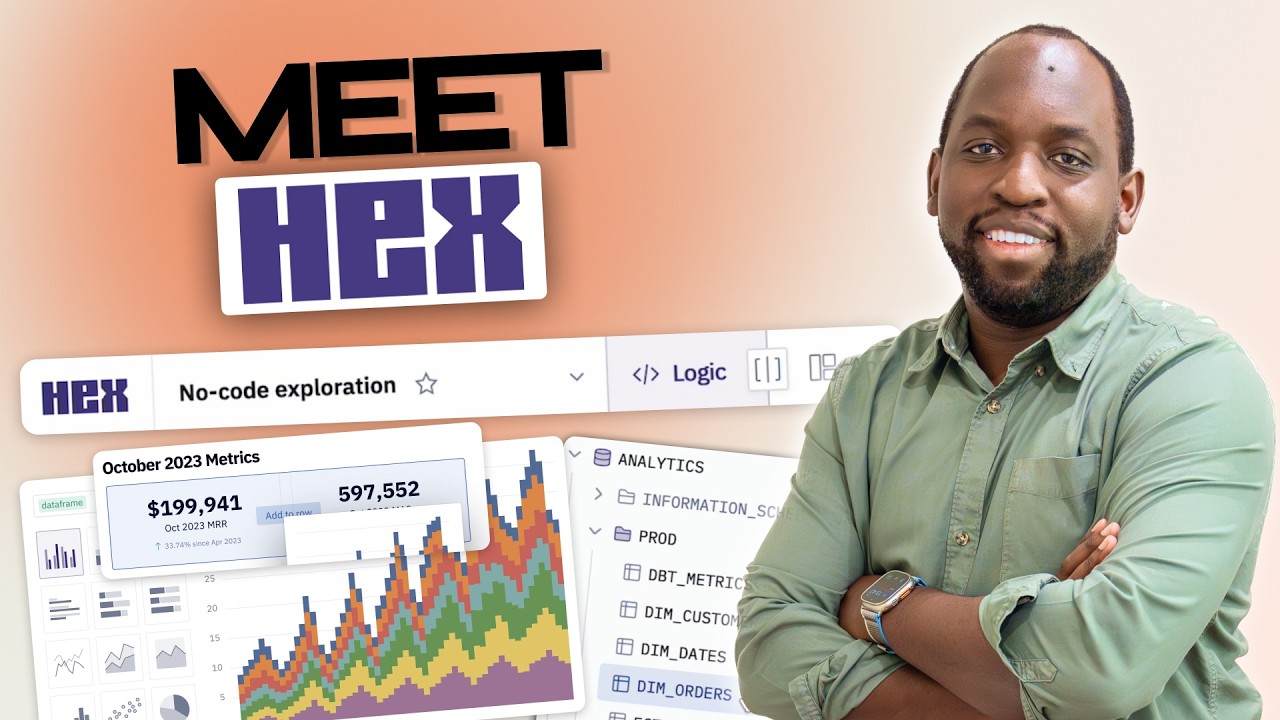 Video 3
 Hex wants to be the best tool for data work in general, not the best dashboard tool, so you switch cells instead of switching tabs.
Useful even before I have made a thing: the latest from Databricks itself. Every link in this section leaves just-tim and opens at the official source.


Databricks Academy is free and genuinely well-structured. Start with the lakehouse fundamentals path.