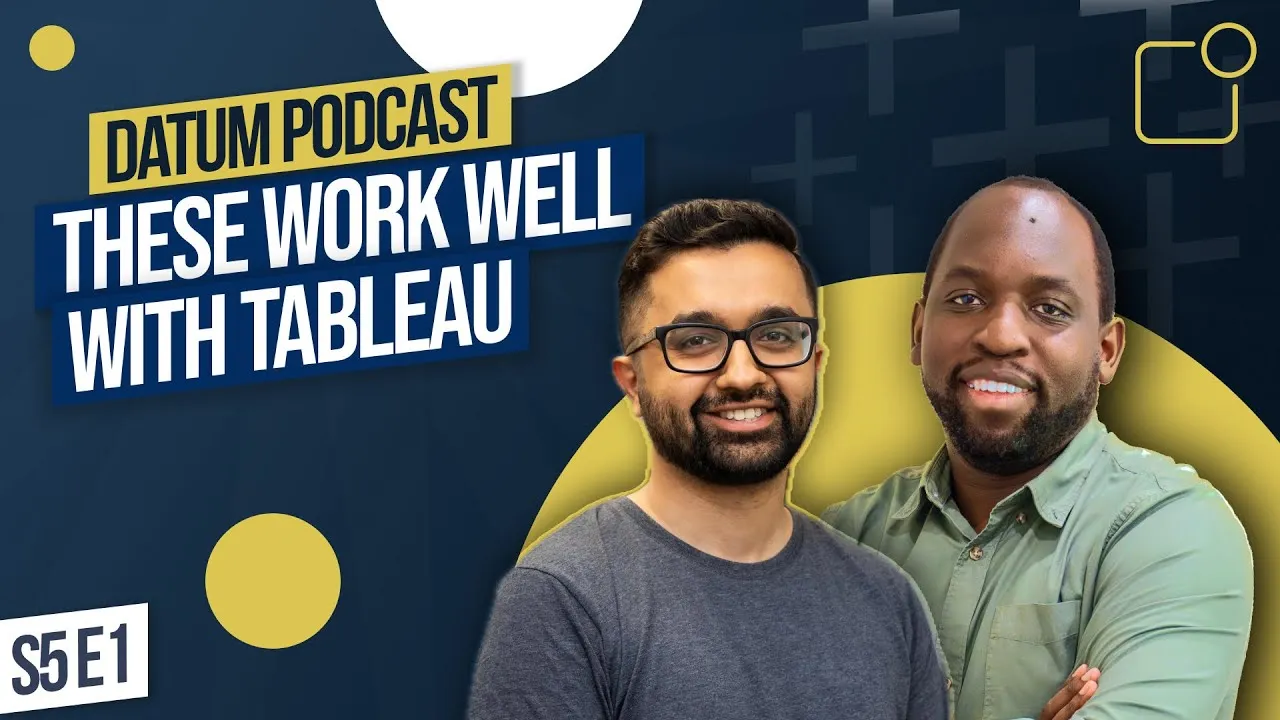
S4 E2: Byte: NFTs, Snowflake and Aggregators
NFTs, Snowflake and cloud aggregators — three trends that look like hype until you work out what they're actually for.
- NFTs are best understood not as today's art-trading speculation but as a mechanism for adding provenance, traceability and credit to digital and creative work over the long term.
- Snowflake charges for compute (via a credit system measured in roughly 60-second blocks) rather than storage, so the right cost comparison is a full year of 24/7 use against a traditional database, then halving it for realistic usage.
- Snowflake works on a metadata layer, leaving the underlying data unchanged, which enables features like querying a database as it looked up to 90 days in the past.
- The real catch with Snowflake is that you must change how you think about pricing and ROI, which is exactly why adoption took years.
- Databricks and similar de-aggregators win by being cloud-agnostic and compatible with many tools and languages, rather than trying to be a single all-in-one platform like Salesforce's walled garden.
0:00Hello and welcome to episode two of season four of the Dayton Podcast.
0:03Ravi, how you doing?
0:04I'm doing alright, thank you.
0:06I'm doing very well.
0:07It's been a fun it's been a fun week as uh for the city football group, I think.
0:11Uh the Mumbai FC won the league a couple of weeks ago and then the Shields uh most recently.
0:16So that's that's been fun to be part of that journey.
0:18And
0:19Fully deserved, fully deserved.
0:20I mean, I thought there was a moment where they were going to lose it, but um that's good.
0:24And and of course, lots of football going on, so keeping very busy.
0:27How about yourself?
0:29Good.
0:29Um busy, busy, busy.
0:31Uh I'm not sure what with.
0:32Uh busy mostly, I think.
0:34Uh I think I've done a quite a bit of trading the like this last week, so I think you always feel more busy than you actually are.
0:39Um a lot of the trainings have taken sort of half day formats because obviously no one wants to be uh online all day uh in a zoom session or a zoom session.
0:47Exactly.
0:48Although one funny thing, um the teams, uh the the the people I was training today are all using Teams and they uh all had the same virtual background uh of a room and an office.
1:00And for one minute I had this sort of uncanny valley thing where I was like, are you all in the same place?
1:07Uh and I I just couldn't quite place it.
1:09Then I realized it's one of these virtual backgrounds and they're all actually, you know, in different places.
1:14So yeah.
1:14I was able to.
1:15It's kind of funny, but yeah.
1:16How how are you finding training?
1:18Do you do you get training fatigue if you do doing back to back?
1:20Like I think that's a that's obviously a part of the job that I used to have with the professional lab, but I I do less so in more uh admin.
1:25Training fatigue.
1:26Yeah, uh training fatigue is real.
1:28Like
1:29Um there's a balance and this sounds like a strange thing, but if you train the same thing every day, you don't become a better trainer of it.
1:37You you progressively become worse.
1:39So you always have to space out training with application.
1:43So um you shouldn't be training something that you haven't done yourself recently, essentially, right?
1:48Yeah.
1:49That makes sense.
1:50And so the fatigue aspect comes from
1:52I think if you load up too many training sessions back to back, then yeah, of course, you don't ever get a chance to step away and use the product and therefore have that excitement of using it, which is what you're supposed to convey when you're training, right?
2:05Sort of train that out.
2:06So yeah, no, definitely a thing.
2:07Uh you have to watch out for it.
2:09And um, just like anything, actually, too much of anything can be a bad thing.
2:12So yeah
2:13Cool.
2:13So what are we going to talk about today?
2:15I think we're going to try and focus on some topics.
2:17Um rather than the broad chat we had last time.
2:20Oh yes.
2:20Well try and focus on six topics, yeah.
2:25Rule of six, rule of six
2:27Yeah, exactly.
2:28Um so non-fungible tokens, that's gonna come in.
2:31NFTs, WTFs, whatever they are.
2:34Um
2:35Uh we're also going to talk a bit about Snowflake because I know Slowfakes has been popping up in a lot of places.
2:40We've seen a few colleagues do some career moves
2:43And actually the person who taught me how to train Tableau left Tableau to go join Snowflake as a trainer there two years ago.
2:51And at the time, I was like, oh
2:52Bold move.
2:53But now, maybe just read the situation very early.
2:56David Speedzia, another one, another friend of the Tableau, Tableau World.
3:03Yeah, yeah.
3:04Um exactly.
3:05Um and so we wanted to talk a bit about Snowflake.
3:07I also touch on AWS because Snowflake is built on the AWS infrastructure, as well as Azure and Google Cloud platforms.
3:14So it's very cloud native and that's an interesting sort of
3:17discussion to to have because of course uh the pricing model needs to take those platforms pricing models into account.
3:23Um then of course Ravi you want us to touch a bit on Microsoft and de aggregators and
3:27general.
3:28Absolutely.
3:28I think that it's it's it's an interesting trend.
3:30I think we we've touched on a couple of those trends in previous podcasts, but digging a bit deeper into, you know,
3:35Why is it why is it that Excel is still a market leader in data specialization?
3:40I think I saw someone scribble the dot into Gartner, right, as a as a market leader.
3:45Yeah, exactly.
3:46Um it's it's difficult to to really get into these topics.
3:49topics without having context.
3:50Something I'm actually proactively going to do this year is learn Power BI because I feel like for too long I've sat on the sidelines and watched other people sort of tell me what's good and bad about it.
4:01And I think as this discussion starts to happen, and I think as, you know, we're gonna see more and more customers evaluate it because yes, it might not be a better product.
4:08It's definitely cheaper though, depending on how you look at it, and in some worlds
4:13That is just more important if you think uh companies already have investment in the Microsoft infrastructure.
4:18So when they say cheaper, they mean they don't have to pay an additional outlay for the same analytical capability.
4:23capabilities.
4:24There's a great stepping stone analogy here, right, in terms of like there's there's levels to all of this stuff.
4:29I think what when we when we used to
4:31You know, when I was at the information, we just talked to customers about well, you know, what what what were you talking about when you talk about Tableau?
4:36Well, and Tableau versus coding in particular, right?
4:38So why would you use something like Tableau versus Ggplot in R or Python, right?
4:42Yeah.
4:43Or any of these libraries.
4:44And the conversational with the analogy that I think either Tableau came up with or Tom Brown came up with, I don't know where this originated from, but was old school BI platforms you think of a as
4:54the camera studio, right?
4:55You're going there to take a picture.
4:57There's a photographer there that's trained in taking pictures in the studio.
5:00The lighting's there, but it's cumbersome to get to.
5:03And you can only take one picture which is in that studio in that scenario, right?
5:07And you you get what you what you came for.
5:11This is old school BI.
5:13And then sort of coding, we we almost talk about as, you know, if I'm sitting here with my um amateur setup, you you've got your DSLR, you've got your recording studio level set up with your soundproofing and whatnot.
5:25Right.
5:26So like that that that is for the purpose, right?
5:28You've you've invested in, you've learned about all the different things you need to consider when working and taking that picture or in this your case recording those videos.
5:36And that's coding, right?
5:37You invest in understanding code and you don't get that instant gratification, but you you have the skill set to develop and understand what's done.
5:45And then in the middle of it is
5:47Tableau, which is your iPhone or your Android device, because you pick it up, that does the heavy lifting, but you can just point and click and you have unlimited goes because it's iterative and
5:57It's not like a disposable camera you've got credits.
5:59Right.
6:00And disposable camera is a nice nice segue when we talk about Snowflake, because they do have credits, right?
6:05Um but yeah so so I th I always I always think of Tableau as that and then Power BI is almost it does sit in that middle space.
6:14I think it is it is that
6:16ability and because it's familiar and mic is Microsoft.
6:18Yep.
6:19That's that's the benefit for it.
6:20But we can dig into that bit a bit more.
6:22And I'm look and I think I'm looking forward to seeing you learn something learn Power BI and get get into that in a bit more detail and almost give your
6:29Hopefully objective opinion on that.
6:31Yeah, of course.
6:32Like the two videos, the two plat sorry, the two pieces of software I will start doing videos on is Snowflake and Power BI.
6:39Uh I'm I'm very much going to uh take Power B I as a learner because I think it's it's all too easy being um
6:46You know, I make videos helping people learn Tableau, but I think there's also value in making videos showing people how you go about learning something new.
6:55Right.
6:55And Snowflake and Power BI are two great opportunities to do that.
6:58One because it's a direct competitor of something I do every day.
7:01And another one because it's a perfect complement with something I do every day.
7:05So you get to see sort of both sides of that picture.
7:07So yeah, um really and also taking it from like a non-compete role, right?
7:12You know, you know Yeah, yeah.
7:14And I think you know if you're comparing day to day from from the stuff you're doing at the information lab, it's yeah, you are taking that compete angle, right?
7:20You are saying like, well
7:22It's better it's not taking it objectively as well.
7:24If I'm a brand new learner, I've never used BI tools before.
7:26Correct, yeah, yeah.
7:29I think the interesting thing and the interesting opportunities just to
7:33You know, I I think I have that bias built in anyway, right?
7:36So um the way to unbuild that bias is to start using the thing that
7:41is making you have that bias, right?
7:43So if I have a bias towards Tableau, you sort of balance that off by using something else for a bit more so that you sort of restore na the natural levels of balance in in terms of your perspective.
7:53So and we'll get into it.
7:54Yeah, and speaking of someone who who's spent the last what five to eight months being bad at something like this, parts of my new job.
8:02Right.
8:02Jesus Christ, I don't understand.
8:03And I'm sitting here making notes and it you know, in my previous role, right, the information is I was able I was able to almost
8:09Rock up and yeah, yeah, I'll hop onto that call and explain Tableau for the same thing.
8:13You mean wing it rather, yeah?
8:14Yeah, exactly.
8:15Don't dance around it.
8:18Completely, completely.
8:19And and and you know, I I'm happy to wing it because I I feel like I have that depth of foundation knowledge.
8:24But like now I'm just like damn like I need to sit down and think about what we have to say.
8:28Yeah, yeah, yeah.
8:29Because I'm not the expert in this field and it's it's it's new and exciting.
8:32I I have an angle on it, but I don't have the full picture like people I've worked in this industry for so long have.
8:37So Right, right, right.
8:38Exactly, exactly.
8:39Okay.
8:39But let's start with NFTs.
8:41What are NFTs, Revs?
8:42You didn't like them when we started this conversation.
8:44I brought it up.
8:45I I I think so NFTs are non-fungible tokens, right?
8:48So non-fungible tokens is it's this new sort of wave
8:51of art collecting via digital now.
8:54What does fungible even mean?
8:55I I'm gonna I think so so fungible means like something that's sent it's a sensory term, right?
9:00So uh you're gonna get a dictionary definition out but
9:03From from knowledge, from my knowledge, and I could be completely wrong, but it's a sensory tamper, something you can touch and feel, and it's like real, right?
9:10And replacement, yeah, yeah.
9:12Yeah.
9:12So a non-fungible token is something that's yeah, not not replaceable and it's it's also not like physical, right?
9:18It's it's it's basically a certification.
9:20So
9:21My my my nice my the nice pro point of reference here is Nyancat.
9:25So Nyancat is a meme from this video from this is when like YouTube was wholesome and it was full of like all this content where
9:33It's people doing like keyboard cat if you remember keyboard cat um peanut butter jelly butt um peanut butter jelly time and the young cat was around that era of the internet.
9:43Um so Niamcat was sold for a c a couple of thousand, a couple of million.
9:47It was basically the first sort of big story of oh NFT this someone bought
9:51the rights, the digital rights to this piece of digital art.
9:55And it could be videos, it can be like an image, it can be like a slightly moving digital art thing.
10:00Yeah.
10:01And I think so how I've seen it is
10:03But it's not the rights to it.
10:05You're not buying the rights to it.
10:06So someone can still set do save as.
10:08They can still copy it and screenshot and share it.
10:11Yeah.
10:12So you're not owning the rights, but you're owning the
10:14original token to it.
10:16Yeah.
10:17You're owning the ownership.
10:18Sounds weird, right?
10:19Exactly.
10:20So so for me it's and and and the the thing when you start seeing things like this go for obscene prices via Ethereum or Bitcoin.
10:26is, oh, this is definitely money laundering.
10:28Right?
10:29Like, but then but then the flip side is you've got art pieces going for similar amounts of money.
10:34Yeah.
10:35So I I guess that's a direct comparison in the real world to this digital world.
10:39I don't and and Timmy you had something to sort of add to that to try and change my mind.
10:43I always I always think of these things as listen, you know, uh
10:47The first aeroplane was obviously not what we were going to use to fire across the Atlantic, right?
10:51But it was the plane, right?
10:53Yeah and it was the concept and it was the idea.
10:55And I sort of think of this as NFTs the same thing.
10:57Look, this is not what we're gonna like, it's not gonna become yeah you know, Christie's isn't gonna go out of business because NFTs have turned up, right?
11:04But what will be that?
11:05Christie's being the auction branch, right?
11:07Yes, exactly.
11:07But what will happen is we'll take the best bits out of this and we'll turn it into something else.
11:12So a really good uh sort of
11:14um concept to think of is imagine NFTs um being used more proactively in the creative industries to help uh add authenticity and traceability
11:23and provenance to uh creative work, which is actually quite hard to do today because you know you can see something on Instagram, instantly copy the style, and boom, before you know it, everything has gone off.
11:34There's a massive world of creative assets on things like Envato.
11:38Uh Deviant art back in the day.
11:40Deviant art back in the day.
11:42And these things are sold to I I mean I use uh some of these creative templates in my video
11:47Imagine if my video had a way of showing to people that listen, Tim has made this video, but he's used it using these assets.
11:54A video which he's recorded himself on his own camera.
11:56Here's the crypto here's the
11:58Cryptography cryptography key for that camera, the time and the location.
12:02He's used these assets, and here's where they appear.
12:04Here's the cryptography crypto- I can't even say cryptography key for that.
12:09And so there's this
12:10Amazing way of adding provenance to any creative work which always attributes back to the original author.
12:16So if you make this crazy template that ends up in 500 videos.
12:19There's a really easy way to demonstrate that and to always be credited for your work wherever that digital work ends up.
12:25So so credit's a great interesting thing.
12:27I mean in the Tableau community, credit is almost like a ooh, let's not get into that debate sort of
12:31sort of topic, right?
12:32Now it's in the digital world it's such a big thing and and there is almost like a respect among digital authors about giving credit where credit is due.
12:39Right.
12:39And I think even on the
12:40on like Instagram filters and now give credit to the creators of the filters, etc.
12:44etc.
12:45Yep.
12:45Um same with things like TikTok and and to an extent YouTube as well, right?
12:48Yeah, yeah, yeah.
12:49Um I think when you when you mentioned that my my
12:53My thought went back to when we first talked about cryptocurrency and the fact that the the idea behind cryptocurrency isn't so much the exchange, right?
13:02So we're not
13:03The the way that cryptocurrency works currently is is based on speculation versus the value against dollars or pounds or whatever currency you're using.
13:10It was never created to be that asset.
13:13The reason cryptocurrency was created
13:15was to have a total number of existing crypto in the world.
13:21Like the direct amount.
13:22And the direct comparison people made to it was gold.
13:26Right.
13:26Like there is a finite amount of gold in the world and that is a fax.
13:31But free if we think about money and fiat currency, that's there there isn't a finite amount of fiat currency because if you run out of money, you can just print it and devalue the currencies and
13:40Again, we can go into the economics of this, but it would be a very different podcast.
13:44But fundamentally, if we think about crypto in this sense of, well, suddenly you're able to track every
13:51Every single Bitcoin and every part of Bitcoin has a code and you're able to understand that in your crypto wallet.
13:57In a similar vein, if every digital has a code and also a bit of traceability and credit
14:01Suddenly this is almost like a well actually this does make sense and if we just ignore this weird trend of art trading and and in a similar bit thing, but if we ignore
14:09Bitcoin booms from the 7,000 race to what is it, 30 to 40,000 and Tesla hoarding it to inflate the price again through speculation.
14:21Yeah.
14:22I mean we could also pivot this speculation thing into Wall Street bets.
14:26Exactly.
14:26How is it any difference?
14:28Exactly.
14:29I was gonna say the same exactly that.
14:31See the funny thing is I think we we as a society get worried about things like big Bitcoin that exaggerate the things about today's world that we don't like, right?
14:42Um, you know, Bitcoin has these raging prices that, you know
14:46People just don't understand.
14:47You know, it's crazy.
14:48I think I think back to when I first heard about Bitcoin and the price of a Bitcoin was in the hundreds of pounds, right?
14:54Yeah.
14:55And Max Kaiser was the first person in 2014 that is heard speaking about Bitcoin
14:59Yeah.
15:00And and he the way he pitched it was this is something that's a security and think of it as a tangible security, not a means of currency.
15:08Right.
15:08Exactly.
15:09So someone tapped
15:10It turned into cryptocurrency rather than like a crypto thing.
15:14Cryptography, yeah.
15:15Yeah, exactly.
15:15Yeah, yeah.
15:16Um it's funny because uh in games they actually have this exact concept where you can um
15:23In futuristic games, they have this concept that you can cryptographically encode a piece of information digitally and then when you need to reproduce a physical asset
15:32Read that digital uh piece of information to recreate the digital asset.
15:36So a crude example is you go into Mars, uh you encode all the information you need into like a chip, and then when you get to Mars, you have a 3D printer, printer, all these things, right
15:45Now if you fast forward like hundreds and thousands of years, the 3D printing will happen so fast it just look like you're being instantiated in front of you, right?
15:52Yeah.
15:54Right.
15:54And so it's exactly the same thing.
15:56And so this need to encode information into a digital ledger is becoming really, really interesting.
16:01And also I think we're also at the point where
16:04We're we're undergoing sort of mass decentralization in lots of different ways, right?
16:08So governments, local governments, you know, things like the EU look a little bit archaic now because it's just like uh
16:15You know, you kind of if you'd set it up years ago like the Americans did with their union, then maybe it would have worked.
16:20But now, actually I think, you know, the world is so connected that some of the benefits just don't quite
16:27I mean uh ultimately the US started off as a trading block, right?
16:30Like it's and and and tr trading is very much depending on currency exchanges and all this stuff.
16:36Yeah.
16:36Yeah.
16:36But anyway, if we you know going going back to NFTs, I think there's an opportunity to make them do some good in a space that hasn't had much innovation recently.
16:46Yeah.
16:46Especially digital and creative work.
16:48I think the pivot point there is like um if you think about the legal field, this is gonna be so important, right?
16:53Like if you think about how yeah imagine if you can use something like an NFT.
16:58or a blockchain follow, right, to verify documentation and say this is the original copy and verify like assets within a big case.
17:08And tag them in such a way so they can't be copied because of the the depth of encryption within that asset.
17:14Yeah.
17:15But the thing is is that for that sort of benefit.
17:17You won't see it in our lifetime.
17:18Absolutely.
17:19Because everything being created now will need to have that encryption for it to be used in a legal case in a hundred years time and everything to be reliant on that.
17:26And also, maybe I'm sort of misstepping the mark here, but weirdly, I think the people who are most likely to innovate in that space are not working in the legal sector.
17:37Absolutely.
17:38For a reason, right?
17:38A lot of that innovation is happening in the digital space still because that's the bleeding edge of where it's happening.
17:44For something like the law sector to take it up,
17:47it would cause a mass disruption actually in terms of the way they do things.
17:50And I think even the law sector itself, if you just put cryptography aside, has been undergoing like a really big overhaul in terms of the way digital
17:59For sure.
17:59So there's a bunch of other things.
18:01For example, your docu-sign is uh and like you know a digital signature that's verified to put to an email address and a person.
18:08Yeah
18:09That's taken a bunch of years to f for have lawyers A trust it and B start using it in in a secure manner.
18:15Because like if you think if you
18:16If anyone is as any of the relatives or friends that work in the legal firm, what they'll tell you is everything's super secure.
18:22You can't take certain things off off-premises.
18:24They still use a lot of paper, a lot of web signatures.
18:26Yeah.
18:27Yeah.
18:27Uh there's there's so much security around information and
18:30that the the where it goes and where it ends up for for good reason.
18:34Um so I I think you're right.
18:36I think that the the first thing will have to be trust and ro robustness to underlie that and and then we'll start seeing e start to see Ekin
18:45Pro probably as usual via startups and smaller law firms, right?
18:48Yeah, exactly.
18:48So that can be nimble in in this process.
18:51Yeah.
18:52Exactly.
18:52And I think it'll happen over time.
18:54But anyway, that's that's NFTs for you.
18:56Watch the space.
18:57Um what I did say to a friend of mine is, listen, if you're a creative and you know how to create these things, create one, because if it ever blows up
19:05Your thing that you created will be worthwhile purely for being in and amongst the first batch of these things, right?
19:11Because the more and more NFTs that get created, the more valuable it is to own something that was created right at the very beginning, right?
19:17There's only going to be a finite amount of those.
19:19So if you know how to create one, take something you're not terribly passionate about, take something, you know, that you you like but you're not passionate about, turn it into an NFT, see what happens.
19:29It's a good way to learn what it is, it's a good way to sort of dabble.
19:32Um
19:32and and get some stuff.
19:33I think I think just a final point on that, there's there's an account called Visualize Value.
19:37Um that guy is
19:40I'm so impressed by everything like in terms of marketing and vision that he does because he's so open about exactly what he's doing.
19:46Yeah.
19:46So more recently he's created a bunch of NFTs purely for the reason of let's see how much my stuff sells for.
19:52Yeah.
19:53Right?
19:53Like he he created these packs and you have no idea what's inside the pack, what the pack means, but there's ten of them.
19:58And you use the number ten because ten is like, oh, there's ten of them.
20:01And I could be one of ten people to own these packs.
20:03Yeah.
20:04They could have literally nothing in them.
20:06Um and he's also taken so a bunch of his images and gifts that he's created and just put them there and be like bid.
20:12And it's like Jesus Christ.
20:13Like it's so interesting to see creatives
20:17Do it, but then I think um Jack Butcher's an interesting guy because he's just so open about this is what I'm doing.
20:22Yeah, yeah.
20:23It's it's as he's actually the per he he has a following.
20:26He's
20:26He's fostered his community very well to the point where it's quite meta because he's fostered his community by telling you he's fostering a community.
20:33Yeah, exactly.
20:34And meanwhile showing exactly how he's doing it.
20:37I'm almost inviting you to copy it.
20:39But then you just can't.
20:40You just can't.
20:42It's very, very, very good lad.
20:44A great Twitter account.
20:45I'll put it in the show notes, Jack Butcher.
20:47He's a very, very cool guy.
20:48I love his stuff.
20:49I love his stuff.
20:49So simple.
20:50So beautiful.
20:51Good stuff.
20:52So the next topic, Snowflake.
20:54Oh man.
20:55So Snowflake, I have to say, like Ravi, you were you were pr you were preaching Snowflake
20:59About three, four years ago.
21:01And at the time I was just like, I don't get it.
21:03And there was even a time where I think we we had a little talk from someone from Snowflake and the first time.
21:07We were new or conference.
21:08And you were like, Mike.
21:09And I was like, we need to you like you like right, good let's go to Snowflake.
21:13You've been banging on, but let's go let's chat to the person.
21:15Let's go chat to the person.
21:16And I have to say, they did not win me over with their pitch.
21:20I just did not get it.
21:21And
21:22Maybe that was then and it's it's tightened itself up and stuff like that, maybe over time.
21:26I don't think it has.
21:27Exactly.
21:28I know this is exactly what you're gonna say.
21:30Um but maybe it was too early then uh for for this more adoption.
21:34Maybe we're more ready for cloud adoption today.
21:36But anyway, um maybe I'll let you do the honors and describe what Snowflake is.
21:40No, I I'm gonna I'm gonna pass that back to you and let you do given that you've you've you've now seen the light.
21:48So the thing the thing that sold me on Snowflake was um
21:52It I think you I think yeah, first of all I think you're absolutely right.
21:55I think the reason it's having its moment in the in the limelight the last eighteen months or two years
21:59is that people are more ready to um sort of embrace cloud.
22:03Yeah.
22:04They feel that cloud is more secure.
22:05Yeah.
22:06Five years ago, or you know, when I when I first came across it was like I think three and a half, two and a two, three years ago.
22:12And I was like, this, this is interesting purely because it was the first instance of something I saw that was just in time.
22:18Right.
22:19As in like, it's basically it's there if you need it and we don't need it running all the time.
22:23The thing I didn't get was how you query it and how you put it there.
22:26Right.
22:26And the second thing I didn't really get was because it was all browser interface, do I need to give my data to someone else to own?
22:34And that was kind of like, ooh, I'm not sure how how that works because in the database world you're so used to installing it onto a onto a server, then seeing it spin up, and then doing the command line, and then you set up your
22:46Set up the database and ingest it using a management tool.
22:49Yeah.
22:49And this was taking all of that out of being like, no, no, no, don't do that.
22:52Just just put it in the browser.
22:53Like you don't need to install anything anywhere.
22:55Like it's already there.
22:56You just need to tell us where to put it and how you want to put it out.
22:59And
22:59The thing they were selling before was a star schema and the fact that it will help you build a star schema in the browser and design that right.
23:06Right.
23:06And I think that they sort of pivoted that to really focusing on the fact that A, it's
23:10that just in dunk open-shut case.
23:13Like it's you you'll only you're only paying for what you use.
23:16Yeah.
23:16And then B, the fact that it's it's scalable and allows you to get bigger and smaller as as you need to.
23:22Mm-hmm.
23:22Now now over to you to do do the mini sales pitch from your side on for what you understand.
23:27Right.
23:27So the way I think of it is listen, Snowflake is a database.
23:30It stores your information.
23:32Unlike other databases, it doesn't need to be on to store your information.
23:36Okay?
23:36So uh the storage cost for storing information that's not doing anything is extremely low.
23:42In fact, it's comical.
23:43To the point where yeah, you don't Ravi's holding up a hard drive right now.
23:47Um in general terms, it it almost costs you nothing to store information on Snowflake.
23:53Compared to a traditional database, because a traditional database has to stay on to keep uh the information persisted and available to you.
24:01Now, the key technology behind it is that it works essentially on a metadata layer, right?
24:07So rather than treating your rows as, you know, rows and columns.
24:10It looks at your information and treats it as metadata, which means the original copy of your data never changes.
24:16Everything you do is being applied on a metadata level, not on the actual data.
24:21Which then allows you to do really, really crazy things because you can essentially do things like instantiate different versions of the same data.
24:29They have this uh really cool feature called a 90-day history where you can
24:32query a database as if you were looking back in time because they work on a metadata there.
24:38Now the thing they do charge you for is for resources.
24:41So instead of treating information as a
24:45resource to charge, they treat the compute as a resource to charge.
24:49So which makes complete sense.
24:50Right.
24:50Because if you if you think if you're doing this in-house, that's exactly what you're paying for.
24:54Exactly, exactly.
24:54So let's take me, I have a hundred thousand rows.
24:58I don't need the powerful database to look at that.
24:59I don't need powerful queries.
25:01So I'll just go in a small, very small instance.
25:03I run my Snowflake instance.
25:05In fact, I don't even run my instance, I run my query.
25:08And the interesting thing is when I run my query, Snowflake looks at my query and decides how much resource and computing power I need to use.
25:16And that's typically measured using a credit system.
25:19Okay?
25:20Yep.
25:20And those credits essentially what you pay for.
25:22Now, the funny thing is, let's say I only run one query a day.
25:26That's not a very efficient way of using it because fundamentally the time it takes Snowflake to turn on the resources to use that query, I might as well do a few other things with it.
25:36So these credits tend to work efficiently in sort of time blocks.
25:39So think of them as 60-second blocks.
25:41So if I do like 10 queries in 60 seconds, it's going to cost me roughly the same as doing one query for one second in that same minute, if that makes sense, right?
25:50And so the optimizations with Snowflake are essentially around how you use it and what kind of questions you're asking and how much power you want to throw at the problem.
25:59And that enables analytical teams in really interesting ways because I can give my analytics team a really powerful instance to go look at the same data.
26:07that my CEO looks at in the morning when he goes and looks at it, but he has his own instance that's never slow, is always on, and will therefore never crash or
26:17something like that.
26:17And it's it's that ex it's that exact tuning right that once once I dug into us like that that's the thing.
26:23And as I said, the way that the Snowfit was put on marketing and pitching itself was like
26:28Around that meta-day slate because that is the beauty.
26:30But if you tell if you told someone three years ago, four years ago, that you know, this is when people are moving away from towards like relational databases, away from transactional and overlapping cubes and stuff like that.
26:41That transition was still happening.
26:43And now you're talking about metadata layer in clouds.
26:45Like, whoa, this is too much, too much to understand.
26:47And also you can't really visualize it in a way, right?
26:50It's not easy.
26:52No, and it's interesting because a lot of the compete statements I heard against Snowflake was always that they're just marketing and they're not there's not enough power in the compute.
27:02And the thing you realize is well actually the marketing works because it's a database, right?
27:07And and I think the the the co the the co the co
27:12The comparison I made to databases is it's like a car or a washing machine.
27:16Like you want the best one, but you also don't want to change it that often.
27:20Like when you when you put your data in a database, you just want it to be in that one place.
27:24And then you just want to tweak and build around it, but you don't want to change that thing and you don't want it to break.
27:30So if you're then if you then, you know, it's it's assured by, as you say, AWS architecture.
27:34You've got this great benefit of the cost model and you can be flexible.
27:39And the just in time part is really great because again, as you say, you can
27:43aim different types of databases based on the types of work you're doing.
27:47Yeah.
27:48Which then means that you know some people find it really fast and some people find it really slow.
27:52You can really be
27:53smart and strategic about what you use, but also how you display that information.
27:57So yeah.
27:58It's so good, it's so good to see like sort of see that Snowflake revolution start to happen.
28:02Yeah.
28:03Exactly.
28:04And so I think I think for analytics it's particularly powerful because in analytics we've long struggled with this issue of resource and too often too many discussions are based on how powerful is your stack.
28:16You know, are you in the middle of the city?
28:21And computing moved on from that.
28:23Like
28:24When you open your iPhone or when you buy your iPhone, nowhere do they sell you the speed of the phone or the RAM it has.
28:31They sell you on the features and the things it does.
28:33Unless you're Samsung.
28:35Hey, exactly.
28:35It's a different type of world.
28:38But you know, my point here is this look what you really care about is the the fact that it does the job that it's supposed to do.
28:44Exactly and so when people are comparing Snowflake with databases, they really struggle with the comparison because I think typically they're doing the wrong comparison
28:51The way to compare Snowflake is to take, assume you're going to use Snowflake 24-7, yeah, for a whole year.
28:59Total up the price and then compare that to the database that you run because that's actually the comparison you're making.
29:05And then once you've done that
29:07Go back in and ask yourself, well, is it possible for me to use this database 24-7?
29:12The answer is frankly no, because any one person can only be at work
29:16for what is effectively half the year.
29:20And so then you just halve your cost and then you started to talk about the real cost of using something like uh Snowflake.
29:26And on top of that, um, let's say you don't maybe you're just storing data.
29:31It's actually quite common for businesses to store data but not really know what to do with it just yet.
29:35And because it's so expensive to store data, businesses have traditionally gone into
29:39the practice of not keeping it because they don't analyze it so I store it.
29:43And so Snowflake really starts to sort of come into play when you think about the world of IoT.
29:48where you want to store a bucket load of information, you don't know what you're going to do with it, but you want it ready and hot in case tomorrow someone's an ide has an idea and you don't want to spend months instantiating it, which is what would happen.
30:00Typically you'd store it in S3.
30:02And then you'd have to use AWS or if you store it in Google Cloud Platform or Azure.
30:07You have to use their processes and skill sets to get these things in.
30:11Snowflake gives you a ready-to-go hot way of doing that with that sort of
30:15having to do so much work.
30:16So in many ways, it actually it's it's so it sounds like the uh holy grail of databases.
30:22People are like, okay, so what's the catch?
30:24And the thing is, is the catch is that you have to change the way you think about the product.
30:29That's the big catch.
30:30The catch is that if you're the first Sorry go for it.
30:34I think that's the reason it took so long to get adopted.
30:36Yeah.
30:37Yeah.
30:37That catch is exactly the reason it took so long.
30:39Yeah, exactly.
30:40And you know, the other catch is if you're the first to hit the database in the morning, yes, it's gonna take two minutes, but the person after you will take ten seconds, and the person after that, no time.
30:48Right.
30:48And and these are sort of small things to realize.
30:51Because yeah, what it's doing in that first two minutes is literally firing up as many servers as you're supposed to have.
30:56And if that means
30:57A thousand, then yeah, it's gonna take a while.
31:00And the fun thing is it it also runs off the same stuff in the normal database does you've got the stored queries, you've got your views, it does all of those great things already.
31:08Yeah.
31:10Yeah, like I said, it's good it's good to see and good to hear.
31:12Exactly.
31:13So, you know, I'm really optimistic for Snowflake.
31:17Um I worry, I worry, I worry that
31:20It's gonna fall over in the same way some things that are very modern and fresh fall over, which is that people spend too much time trying to compare it to the way old way of doing things.
31:31You see for me if you look at Snowflake, I think you have to think about pricing your technology differently.
31:35You also have to think about how you evaluate return on investment differently.
31:40Because the return on investment on Snowflake, to me, well, if you don't use it, well, you're basically measuring the ROI of storing it.
31:49Like if you literally bought Snowflake and all you did was load data in it, then you sat in it for a year, the only bill you'd get back would be for storage.
31:56I think within reason.
31:57I think you have an enterprise setup, you do have to play like uh a standard feed just to have
32:02Certain things instantiated.
32:03But generally speaking, the return on investment argument flips back on you.
32:08And actually that's quite a scary thing for lots of businesses, right?
32:11Right.
32:11Imagine telling someone, yeah, this will only cost as much as you use it.
32:14And people can't people just can't process that in their head.
32:17And they're like, but you use it all the time.
32:18Well, no, you don't.
32:19Do you do queries all the time?
32:20No, we just store data.
32:21Okay, yeah.
32:22The storage price is this, the query price is this.
32:24And because people don't know and understand what queries really do, it's really sort of scary.
32:29But they have a great interface for showing you how much effort a query takes.
32:33And when you get into the really big instances, you might get into this worrying world where people are running lots of unoptimized queries and then you're into this optimization game.
32:42And so the next best feature would be for Snowflake to build in a layer that looks at your query and says, yo, that's a stupid query.
32:48Let me run this instead and save you some money and throw that back at you as the answer to your first query.
32:54Then you're talking.
32:55And you know that's coming, right?
32:56Like right, right.
32:57Yeah.
32:58And and this this is where the world is going.
33:00I think we talked about in the previous podcast where
33:03The world is going towards just assisted work, right?
33:06The the computer's assisting you to do work and if if the c if if you're able to get that level of shortcut within a database, oh man, you're flying.
33:13It's so good.
33:13Yeah.
33:14So Nectar UK runs on Snowflake.
33:17Which is uh Snek Nectar is uh is a royalty reward scheme that works with lots of supermarkets, it works with eBay, uh Sainsbury's, I think Argos, yeah, they're all in by the same company.
33:28Uh Sainsbury's and Argos um all use nectar points and the way they use it is obviously when you're using your you know buying groceries they are tracking sort of your spend across all the
33:38these different things and that is information they give back to those retailers about the kind of customers they have what they do and so on and so forth.
33:45And so um it works at scale.
33:47It works in lots of different ways.
33:48Um I'm actually gonna go to the website now and see, okay, which uh who which customers do they have, right?
33:54That's a key question.
33:55What um and this is this is why you're doing that, I'm just gonna talk about like
33:59This this is a great pivot to you know just cloud in general.
34:03Right, right.
34:03Because the the the promise of crowd the cloud is that, you know, on Black Friday
34:07um Amazon.
34:09com or any other retailer can beef up their stack to multiple servers just by clicking the number of like duplicated servers and creating a union within that and turn them off after after that period of business, right
34:21And suddenly you're able to, again, you're paying for what you use, therefore you can scale and scale up and scale down really quickly.
34:27And you can do it from your phone because it's in browser.
34:29Like it's right.
34:31So much of it is just layered into convenience, security, and scalability.
34:36Mm-hmm.
34:37Yeah, exactly.
34:38Um I can't find it easily like uh
34:41a customer page.
34:42Not that it doesn't exist.
34:43I'm sure I'm just not familiar with their website.
34:45So um I could Google Snowflake customers, but I worry I'm gonna get um hit by partners.
34:51Snowflake, let me just type Snowflake
34:54uh customers.
34:57Thousands of success stories, of course.
35:00Macesson, okay, fair enough.
35:02Uh McKesson's a huge drug company in the US.
35:05A and D, I don't know what that is.
35:07Uh Penguin, Random House, Lionsgate, Cooper, University of Notre Dame, Adobe, Nielsen.
35:13Oh, Nielsen, that's an interesting one.
35:15They definitely need it.
35:16Um, Essex, Domino's Pizza.
35:18Devon, HubSpot, Delivery.
35:21Uh interesting delivery, because e delivery runs on AWS as well.
35:24So it's funny that they're using another partner that runs on top of AWS to deliver some of their capabilities.
35:29capabilities capital one S P Square Blackbird Rakutin Overstock Cisco Sainsbury's Logitech Instacart it's an absolute blockbuster list Siemens Gosh
35:43DoorDash.
35:44These are these are the big hitters in the US.
35:46Yes.
35:47The ticket can't roll fast enough.
35:49Micron, uh semiconductor um company, Yamaha, Office Depot.
35:54Is there a company that isn't on here?
35:57Emirates, of course.
35:58Of course.
35:59And thus then's today's ad break on the Dayton Podcast.
36:02Comcast.
36:03Prologis.
36:05It's uh five hours later.
36:07Ice Oh, got back to the beginning.
36:11I can see McKesson again.
36:12Scripts.
36:13Okay, we've we've gone through all of them though.
36:14Oh no, two E's come back.
36:15Two E.
36:16Two E group.
36:17Uh there's a different ticker on the bottom now.
36:19But anyway, you get the idea.
36:20Sonos.
36:21Sonos.
36:22Another big hitter here.
36:24Uh come on, two K games.
36:26I gotta see all of these.
36:29We should definitely email all of these companies, but look, we're just giving you all a shout out on the day.
36:35What who's Rulala?
36:37That I have to go look at.
36:39Rula la.
36:41Oh wow.
36:42Okay.
36:42Google auto completed it.
36:43It's a boutique.
36:45Interesting.
36:46Okay, cool.
36:47And yeah, so nice.
36:49Yeah, that's everything.
36:50We've we've covered all of them that were on the website.
36:52So not a small range of customers.
36:54These are huge customers, very, very big customers.
36:57I could have just scrolled down and they actually have a list on the page as well.
37:01Betterfair in the UK as well.
37:03Gosh, huge companies, huge companies.
37:06So I'd I'd be interested to see more about this.
37:08I think I need to just go and
37:10Involve myself in the literature and the content they've already got because it's clear that lots of people have joined this wagon already.
37:16And hey, this this is another great sketchnote that you can put out, right?
37:19Like what is what is Snowflake in under 10 minutes?
37:21Yeah.
37:22So you know, if someone said this to me
37:24Like, when are you going to do a sketchnote that isn't Tableau related?
37:27And I reminded them I had actually, because um I did some sketch notes for Tableau.
37:30Yeah.
37:31But um they
37:33I made a very good point, actually.
37:35And there is a whole world of uh content out there that I can do that is going to be very, very interesting for this topic.
37:41So yeah, definitely something I'll do.
37:42Amazing.
37:43I think this is a good pivot point back into the sort of the the tangentially related cloud platforms conversation we're gonna have.
37:52I'm I'm just gonna quickly throw in data bricks before we m move into that.
37:56Right.
37:56Because it it moves in quite nicely to to that platform.
37:59So
37:59For you those of you that don't know, Databrace is sort of this up and coming company.
38:03I think they're about to IPO or that have just recently IPO'd.
38:07Um
38:08And the thing I like about Databricks is I had no idea what Spark was.
38:12And if you think about Spark, you think about Hadoop.
38:14If you think about Hadoop, you like, there is no good Hadoop Hadoop cluster.
38:18I've never spoken to anyone
38:20That's used Hadoop.
38:21Yeah.
38:21Um, that A can explain what Hadoop is, and B why it works and if it works at all at an enterprise level.
38:29And it seems like this again, it's like the yellow elephant, and that's that's every what everyone knows about them.
38:34Now Databricks is an interesting company because it's it sort of pivots into two of the topics we've got left on this pod, which is firstly cloud and and sort of the the the Azure platforms as well as AWS.
38:46And secondly, this concept of a de-aggregated software.
38:49Right.
38:50So Databricks was born out of um Apache Spark, and it's basically a data engineering tool
38:59That allows for collaboration and just like machine can tap into your cloud in a cloud environment, your um database environment.
39:09Bring in ML and also do things like you can create a notebook that's got some Python in, then pivot into R, then use another language, and you can use a notebook that has all these different languages in the same one to do different functions.
39:20And that that's the versatility and the power of it
39:22And then from there you can then deploy it into these automated flows.
39:26So I'm a big fan of it.
39:27And I think it's one of these ones where it is very much on the um when we talked earlier in this pod about the code.
39:33element where you've got the bespoke DSLI of the person you invest time.
39:37It's definitely one we have to invest time into it.
39:38It's not something that's got that low barrier to entry.
39:41But I think the the j uh the draw uh for for it is that it's one of these de aggregators.
39:47Like it's very much a pipe
39:50Not a and it's a pipe with like you you can change the nut to be you know you can screw it into many different tools, you can bring stuff in from many places, put into different places, it deploys on Azure, you can deploy on AWS and
40:04It's it's such an interesting concept because it's I think the first of many of its ilk where where companies have I'm I'm sort of bleeding into the deagraite chat, but companies have realized that
40:14Where a couple of years ago everyone was trying to be that single platform, that all-in-one solution.
40:19Um the benefit actually is in not being an all-in-one solution, but being really compatible with many.
40:24Yeah, it's interesting because I've gone onto Datapric's website and
40:28There's a customer I've seen here, which is also here, which is also on the Sniffleck one, which is Nielsen.
40:32Like, is there a database that Nielsen doesn't use?
40:37Literally, they seem to use everything
40:39And you know, I don't know, if you've ever worked in fast moving consumer goods, uh Nielsen pretty much have most uh fast moving consumer goods companies over a barrel because it seems to be the only one that collect data about what happens in stores.
40:51Um Nilsen and Cantor.
40:53I'm sure one day they'll merge and then no one will have anything to say.
40:56Um but nonetheless, it's really interesting.
40:58These companies with huge data problems.
41:01Um
41:01do sometimes look like they're just throwing money at lots of different sort of horses because of course any anything that solves a small problem for them, um, they're more than happy to go through the trouble of trying it out because of course they don't really face the cost.
41:14the clients they charge money do.
41:16So you know, at the end of the day, if if if their big customers want a certain capability and something like Databricks or Snowflake can really offer that, then yeah, they they they're gonna go for it.
41:26Um which is
41:27Interesting.
41:28And it's completely cloud agnostic, right?
41:29And and that that's the thing.
41:30I if you um if if you've got Azure you've got Edwin S and you've got Google Cloud, right?
41:34And
41:35Yeah, talking about these big behemoths is is where we get into this concept of look, if you're not Salesforce, Google Cloud, AWS, or Azure.
41:45Listen, you're not gonna be a platform.
41:47Salesforce isn't on there.
41:48Salesforce isn't on there.
41:49And that's you know, uh Snowflake aren't running on s on on Salesforce, are they?
41:54They they're running on AWS's or in Google Cloud.
41:57So I think we give Salesforce too much credit to call it a platform because it's not.
42:01It's it's a walled garden.
42:02And it's the classic it's a classic uh you know scenario where you think it's a platform.
42:07But try leaving it and you find it's impossible.
42:11Right?
42:11Like it's it's not a platform.
42:13Because if I was an AWS and I wanted to go to Azure, I can.
42:16Yeah.
42:17That's why they're cloud agnostic.
42:18But if I'm on Salesforce and I want to go to something else
42:21It's very hard.
42:22Yeah, that's that's true.
42:23That's true.
42:24That's true.
42:24If you want to go from Salesforce to Zero Dynamics, good luck.
42:28Good luck.
42:30Fair enough.
42:31Fair enough.
42:32But I think
42:33Yeah.
42:33But I think you know it's still it's still very much the you know uh Salesforce is a good example of a a full full full on aggregator.
42:40Like we're gonna eat you up and take all these companies and and pipe all our stuff into it, right?
42:45With the p p with the pure thing of we are a CRM company.
42:48Right, right.
42:49And they run, guess what, on AWS.
42:51And so I I you know I've always said I wish AWS bought Tableau, because I think that would have been the best place for it.
42:58I I
42:59You know, you can even see signs of it now, like we've got 2021 about to come out, and I can't be more frustrated that half the stuff in there is for Salesforce users.
43:09who also happen to have a license of Tableau, who also happen to have paid for Einstein Analytics add-on, right?
43:16So there's like four layers of complexity in there.
43:19I need four products.
43:20I need Tableau, four Salesforce, I need the Einstein add-on, right?
43:26And if I want to really sort of
43:28Finish it off and make it all amazing.
43:30Then I also need the data management add-on if I'm gonna run it through prep, right?
43:34So I've just bought four things
43:36And yet it comes from one company.
43:37How does that work?
43:38It's not a platform then, is it?
43:40Exactly, exactly.
43:41You're not paying for one service.
43:42It's not one thing.
43:43And like AWS will send me one bill and okay, yes, they'll charge me for a hundred different products, but the costing and everything just seamless.
43:49It just
43:50feels like one thing.
43:51So anyway, you know, going back to what you're saying, for me, the three aggregators are AWS, Azure, and Google Cloud.
43:59Uh I have to say Azure and Google Cloud have done a lot of work to meet parity with AWS because I remember Snowflake two years ago.
44:07They did not have
44:08an option for Azure.
44:09They definitely weren't working on Google Cloud yet.
44:12And one of the things they said then is that those platforms needed a little bit more maturity to kind of get to the point where they could do what they were doing on AWS.
44:19And so
44:20You've seen that maturity sort of come through, and now these platforms, you know, stand on their own two feet pretty much.
44:26Um, you know, you see you see lots of sort of modern companies, but also established companies deciding to run
44:33A really good example I know of is S3 compatible storage, which is a term you might hear.
44:38So there's a company in America called Linode.
44:41They um sell servers, but they have a system called um
44:45They call it Linode block storage and it's S3 compatible, which essentially means if you've written uh code for AWS storage
44:53You can literally run the same code on Linode and it will work just the same way it worked on AWS without you having to change your code.
45:00And that's going to become more apparent in across the platform.
45:03So it doesn't matter where you run.
45:04You just go to the place with the best feature for the task you have at hand.
45:07Exactly.
45:08And this is where I love Databricks, right?
45:10It's it's the ability to be like, right, I've got some code, but it's not in our uh well, we're in our shop, so
45:16Yeah.
45:16Looks like you'd have rebuild that code in Python.
45:19It's like well no, no, in this you can have a notebook with multiple different code lines and then still automate and then you can collaborate and then you can share and then you can deploy and
45:26You can if it's in Azure, you can then bring it into DevOps and then you you deploy through DevOps and have this cycle of production.
45:33And it's really interesting to see to see that diversion of of the different code bases and the different like
45:38Systems and tools come together.
45:40And what that means to the everyday analytics user is suddenly you don't have to be a full stack developer.
45:46You don't you just need to be a specialist.
45:48in what you want to specialize in.
45:50Yeah.
45:51And then find a company that's using the tools that allow you to be flexible in that deployment and has that almost diversity of skill sets in a team that you're working in.
45:59Yeah.
45:59Exactly.
46:00Exactly.
46:01Um what I'm interested to see over the next say three years is like I've always I always think that we're in this sort of uh phase of transition with all these platforms, right?
46:12And what I want to see is where everything settles.
46:15A few years ago, you had this sort of disruption.
46:18Tableau was starting to face competition with Power BI, and what happened over the last four years is that Tableau cemented itself as best in class.
46:27I think, in my opinion
46:28Tableau and Power BI cemented themselves as the market leaders.
46:31You know, click basically disappeared off the face of the earth.
46:34And uh, you know
46:36When you do analytics, there's just two tools.
46:38Okay, there's other tools which you might go dance.
46:41Thoughtsport, look at all these things, but those are
46:44niche players as the Gartner Report likes to call them.
46:47Backhanded compliments in my view.
46:51So what I'm curious to see is listen, okay, Salesforce and Tableau.
46:55Yeah.
46:56Where are they gonna land?
46:57You know, where is you know are they gonna drop the Tableau Moniker and where is the Salesforce platform gonna land as an analytics player?
47:05Where is the database offering coming from?
47:07Because Salesforce has this wonderful CRM system, which is great, but what they don't have analytically is the ability to take that data elsewhere and do other things with it.
47:16Okay.
47:17And that's always going to be instantiated into a database.
47:20It doesn't matter how much you have a nice interface, at the end of the day, fundamentally in every enterprise, if you want to work with other data sets.
47:26You're going to need to put that data somewhere.
47:29And I don't think Tableau is going to answer that question.
47:31I don't think Tableau is the part of Salesforce that goes and builds a database.
47:34So here's my here's my challenge, right?
47:36What happens if hyper
47:37Jimba Hyper, Hyper, that's that that German little company that we talked about in possibly our driest episode to date.
47:47What what if they spin that out as a standalone database?
47:49Does that it how far away is that from competing to you know our new our new favorite database Snowflake?
47:55Tableau's too distracted competing with Power BI to build hyper.
47:58in my opinion is a database.
47:59I I like if we look at where the focus is at the moment, um if that was actually gonna happen, it would have happened by now.
48:06We would have seen elements of it.
48:08Um we wouldn't see yeah we'd see elements of it in other places
48:12In my opinion, that is that is almost uh a separate company that you buy, you give the IP to them as Salesforce, and you say, right.
48:22Tableau have this great IP, it's called Hyper.
48:24We want you to take it to the next level.
48:26So go buy another database company that's small, it's hungry, snifflake, and uh, you know, go go go make it do something awesome with with hyper, whatever you get, right?
48:36And flip it on his head and go for the um the scorned lover in this scenario, Exosol, which is everyone's favorite.
48:44Everyone's previously favorite database company.
48:47Right, right, right, right.
48:49Like sudden suddenly Exosol is
48:51cast to one side is oh everyone's talking about snowflake now and and listen I again uh I'm I'm 100% gonna gonna say like well I I I sort of discarded Exol a couple of years ago
49:03I in in the f i i in so much as it's hard to set up.
49:07It's n it's not the easiest to maintain in terms of compute.
49:11And scaling it is it's not cheap.
49:16Right, right.
49:17Right.
49:17Yeah.
49:17Yeah.
49:18I mean there's lots of reasons.
49:19For some companies, those aren't the things that matter, right?
49:21Like it's weirdly for some companies, like doesn't matter how much it costs.
49:25We we we've got bottomless pockets for what we do and the customer we don't pay, the clients pay, right?
49:31And the big big benefit and the thing that Exosol has over Snowflake and over Hyper is the secret source that makes it really, really good.
49:40Yeah.
49:41And it that's that's within the transaction layer of it, of how it combutes and ingest data and then allows you to query it in batches.
49:48Yeah.
49:52That's the benefit that Exosol has and it can work with billions of rows and it's remarkably fast at that scale.
49:58Yeah, yeah, yeah.
49:59But the world doesn't need a big database anymore.
50:02It needs a database that allows you to be flexible.
50:05Starting on a DB
50:08It's already been answered.
50:09It's what Amazon runs on.
50:13There we go.
50:19Isn't going to be a snowflake.
50:20I think Snowflake is about a couple of years away where they're going to grow and become a behemoth before they're going to be able to do that.
50:24But they have no place.
50:25They have no place.
50:26They need, they need, they need.
50:29I don't think as Snowflake you can
50:32you can solo become a platform.
50:37No, no, no, no, complete.
50:38And and they should f 100% follow the database route of we're going to be deaggregated.
50:42Yeah.
50:43Yeah.
50:43Right.
50:43That that's the benefit.
50:44And that and because of that is why I'm saying is where I say databreaks and snowflakes, the one and the same in the conversation is that style of company
50:52is what you should aspire to be.
50:54Yeah.
50:55And be as big as you can without being bought out.
50:57You know, another company of this ilk that you know is is currently like similar to Excel, I believe, currently ready to be bought out.
51:04And sucked in is Ulterix.
51:05Yeah.
51:06Ulterix is in is is in that position of who's gonna buy it?
51:09And and for me, that that person is gonna be um
51:13AD um AWS.
51:15Yeah, potentially.
51:17I mean obviously Microsoft too, give given given what I'm what I'm working with at work, but
51:22The other thing you've got to ask yourself, what are you buying with these platforms?
51:25If I'm buying Snowflake, I'm buying quite a lot of good things.
51:29There's a lot of good positive things.
51:30in in Snowflake, especially if I'm someone like AWS or someone like that, right?
51:36Um, you know, it's it's in one of the interesting comments I remember hearing about Azure that one of the biggest reasons Azore was growing at one point
51:43is because businesses were running tableau servers on it.
51:45So like well um you know why as Microsoft you're getting a piece of the Tableau cake
51:53Without even having to own the product.
51:55So why would you buy it, right?
51:57And it's the same thing with Snowflake and these other things.
51:59You know, why would you buy Ortiz?
52:01Given that what they do is actually not that unique, right?
52:04Tableau have just proved that actually you can copy the sentiment of Ortrix very easily.
52:09Right?
52:10Um, and add your own innovation to it.
52:12Might not be as good, might not be as powerful, but that's not what matters.
52:16It's the sentiment, right, that matters.
52:17You just show that you can copy the concept um very well.
52:20Uh Dagi it's not copied, but y you know what I mean.
52:23It's exactly the same workflow-esque uh sort of uh uh interface, just done the tableau way and therefore it has an inter it actually has an experience and a user interface to go with it.
52:33So I'm I'm just curious, you know, Snowflake, where is it gonna land?
52:39Where are its customers gonna want from it?
52:41Has it got the chops to fight its own corners against the big database?
52:45I'm not sure it does.
52:46And therefore it needs some sort of strategic partner at least.
52:49It might not be a purchase, but it needs strategic partners.
52:51So
52:52Whether it pallets up with Tableau and all these modern analytical tools and says yes, Power BI, all these guys, you know, let's go.
52:59And then it runs natively in Azure, Google, and AWS, so everyone loves them.
53:03Fine.
53:03Who knows?
53:04Um see where it goes.
53:05But yeah.
53:06Interesting times interesting times ahead.
53:09Um I think I I think what the the last thing I'll say on Snowflake is uh I'm also wondering
53:18How it's this this is not like not everyone buys a database, right?
53:23So you know Tableau, easy.
53:24Tableau public exists.
53:25We all build visualizations, we all get it, right?
53:27To Snowflake, no, not everyone builds databases.
53:30So this gotta
53:31an inherently smaller captive market of people that can get excited about it and their trial is great and you can get stuck in.
53:38But what I'd really love them to do is to really capture this enthusiast market
53:44And I say that from a PC building perspective.
53:47You can buy a PC as an enthusiast, and what that really means is you understand enough about computers and PCs to want the kind of features that, you know, data centers want.
53:57without the complexity of a data center.
53:59So what that means, really powerful multi-core CPU, really powerful, you know, logic boards that can do kind of things that you do when you're in a server rack and stuff like that.
54:08So I'd love them to go for the enthusiast database admin who has some information about, let's say, their life or who has a bunch of photos, or you know, I'd really love them to go for that
54:21Someone like me who has lots of quantified self-data, needs somewhere to store it, has some metadata for my business or whatever, and needs somewhere to store it.
54:29And just offer me a really nice way to grab that metadata from wherever it is, uh, you know, Amazon, AWS, Google, and just bring it into their system as like some sort of database.
54:40And because it's so cost effective, it actually doesn't cost me that much.
54:43So go for that enthusiast market.
54:45Create their own Tableau Public in esque, but obviously that's spot on.
54:51And and the benefit is
54:53That model that can exist so easily within so many industries where you just create pockets of data sources.
54:58Yeah.
54:59And then you say, oh look, I'm just gonna charge you how much it costs to connect to it.
55:02Yeah.
55:02Because that
55:03You can either set up as a subscription model being like monthly you're gonna get this.
55:06Yeah.
55:07And it's an all you can eat, or you charge per transaction.
55:09It's so easy to transfer that cost because you get an itemized bill at the end of every month.
55:14Exactly, exactly.
55:14You see what you can literally see the costs happen as you're doing it, right?
55:17Right.
55:18And so what's really fascinating is that enthusiasm that you build up through that enthusiastic market does the marketing for you, which is where Tableau have been very smart over the years.
55:27And actually
55:27It allows people to prove the value of it in a very small, tangible way without really costing them anything in terms of marketing and without it really costing anything in terms of businesses, making mistakes and failing on it, right?
55:40And so yeah, I hope that's what they do over the next three years.
55:43Create sort of a a really strong enthusiast market that doesn't require you to have to go in for the trial.
55:49I know it's a 30-day trial, it's a pretty forgiving trial.
55:51I you know, on their on their pocket
55:53But it's a really I think there's a there's a more interesting market there when the enthusiasts say, okay, listen, if you put a hundred pounds into this a year, we'll run your database for you and we'll optimize it.
56:03So you never go over that hundred pounds.
56:05Let's solve that problem together, right?
56:07And then you can use it, and then maybe towards the end of the year it tells you, hey, you still got 50% of your credits.
56:12Let's run some crazy ass queries on your database.
56:15And let's do some fun stuff with it.
56:20It's such a flexible and and it's it's that flexibility that
56:24Is the power behind it, right?
56:25Right.
56:26Exactly.
56:26Anyway.
56:27I think we better call it there.
56:28We've been recording for an hour.
56:29I hit record an hour ago, according to this thing over here.
56:32Yeah.
56:33Um, we're gonna try and do some interesting things actually.
56:35We're gonna try and create videos from these.
56:37So what actually happens, uh well, what has happened in the past for the last
56:41three seasons is that we normally go on FaceTime and we talk about it.
56:45However, in the last few times, FaceTime has failed us and we've been using season.
56:49And so we're staring at each other on a video call and we're thinking, hey, we've done this before in the live streams, we put these on YouTube.
56:55So what if we just, you know, stream these live or even just recorded them and then put the videos up afterwards?
57:01So we're probably going to start doing that.
57:03Look out for another YouTube channel.
57:05Yes, opening my second one.
57:07Or we can chuck it into your one and you know we go now we can tap into your organic fan base.
57:12Uh datum datum is its own big uh thing.
57:14We're gonna grow it from the ground up.
57:18So yeah, we've already got some datum content on my channel actually.
57:21actually but yeah we'll we'll grow a nice organic channel so people can tune into our one hour rambles um and and we can sort of get a sort of a new audience there.
57:29So look out for that.
57:30Um look out for the Dayton Podcast YouTube channel.
57:32It actually already exists.
57:33I think it already exists.
57:34Haven't done anything with it though, that's the problem.
57:37I think the last time we used it was possibly for the f the the live stream recording we did.
57:41Exactly, exactly.
57:41So what I'll probably do is I'll spend a weekend, I'll sit there, re-render all our past episodes
57:46um just the MP3s and then uh we'll get these things up.
57:48So look out for that and uh yeah.
57:51That's it for the show.
57:52We'll catch you very soon.
57:54Um Ravi, it's the first time we've recorded
57:56Not back to back within two weeks on time, yeah.
58:00In a while, I'll say.
58:01It's not the first time, but it's in a while.
58:03First time in a while.
58:05Exactly.
58:06Exactly.
58:09Up for four consecutive episodes last time.
58:11Right, right.
58:12I think that's our best streak, so let's get let's see what we can talk.
58:17GG as they say.
58:19GG
58:20Good stuff, right?
58:21We'll catch you in the next episode, guys.
58:23Take it easy.
58:23Nice one.
58:24Take everyone
Future-proof your career https://n1d.io
| We’re back this time talking about Snowflake, the Cloud, deggregators, NFTS & Microsoft
Feedback welcome on Twitter to Ravi at @scribblr_42 or Tim at @tableautim - or e-mail us, at [email protected] (mailto:[email protected])