 Tableau | Data prep | Analytics
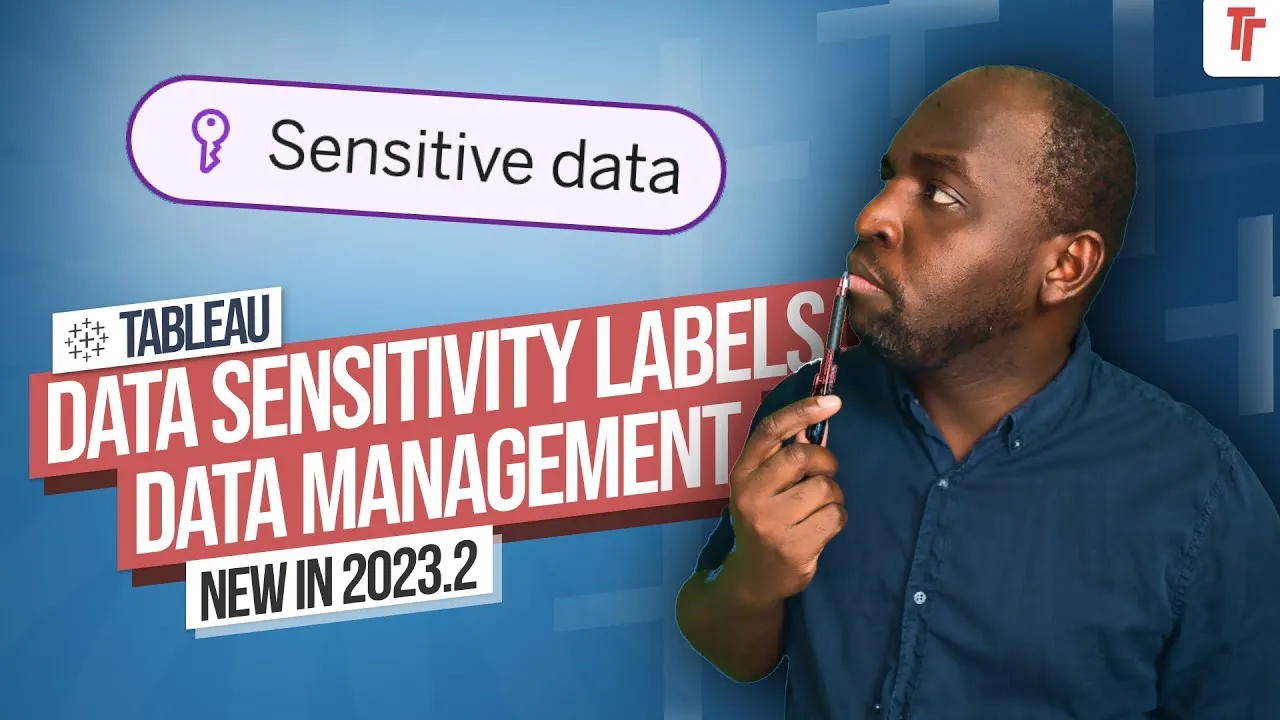
 Filter and sort in Lineage | New in Tableau 2023.2
Tableau 2023.2 finally lets you filter and sort inside the lineage tab, so you can stop scrolling to find your fields.
- The lineage tab is reached via the Explore tab, then a specific data source, then the lineage view at the end of the tabs.
- Lineage requires the Data Management add-on on Tableau Server, which many organisations don't have enabled by default.
- You can now type a field name to filter the lineage field list rather than scrolling alphabetically, which helps with large data sources.
- Fields can be sorted alphabetically or ordered by how heavily they are used across sheets and workbooks.
- Lineage surfaces certification status and inherited sensitivity labels from upstream or downstream metadata.
Tableau 2023.2 adds filter and sort controls to the lineage tab, so you can search for a field by name or order fields by how heavily they're used instead of scrolling an alphabetical list.
Lineage shows how a data source's fields connect upstream and downstream, plus certification and sensitivity labels. This walkthrough uses a sales data source to demonstrate the new filter and sort controls.
- Open the lineage tab 0:00
Go to the Explore tab, select a specific data source, then click across to the lineage tab, which sits last in the row of tabs for that data source.
- Check certification and sensitivity labels first 0:20
Before digging into fields, note whether the data source is certified and whether it's inheriting a sensitivity label from something upstream or downstream — these can affect what you're allowed to do with the data, so it's worth checking every time you open lineage.
- Confirm you have Data Management enabled 1:00
If the lineage tab isn't visible at all, your organisation's Tableau Server likely doesn't have the Data Management add-on deployed; this is common and worth raising with Tableau if you need it, though pricing for it is described as a bit unusual.
- Filter fields by typing a name 1:21
Instead of scrolling an alphabetically sorted list to find a field, you can now type part of a field name and hit enter to filter straight to it — most useful on data sources with a large number of fields.
- Sort fields by sheet usage 1:41
On top of alphabetical sorting, you can order fields by the sheets that use them, letting you see at a glance which fields are most or least used across your workbooks.
- Toggle between most and least used 2:41
Switching the sort direction on the sheets view flips the list between most-used and least-used fields, which is handy for spotting fields that are barely referenced anywhere.
- The lineage tab only appears if your organisation has the Data Management add-on enabled on Tableau Server — many don't have it on by default.
- Certification status and inherited sensitivity labels shown in lineage can come from upstream or downstream sources, so they're worth checking even if you didn't set them yourself.
- The sheet-usage count looked unreliable in testing: a field used via a SUM in a downstream workbook still showed a usage count of zero, so treat the counts with some caution rather than as a hard source of truth.
Reach for this when you're auditing a large, complex data source and need to quickly locate a specific field or identify which fields are actually being used (or ignored) across your workbooks.
How this Rollup was made provenance & method
A Rollup is drafted by AI from the video's transcript, then reviewed and edited by Tim. Everything used to produce this one is listed below (the model, the exact prompt, and the source video), so the process is transparent and reproducible.
- Transcription
- On-device: NVIDIA Parakeet v3 for recent videos, OpenAI Whisper large-v3 for earlier ones. The transcript never leaves the machine or gets published.
- Drafting
- Claude Sonnet 5 in the cloud, from that transcript.
- Prompt
- The exact Rollup prompt (v2) , the full system prompt, unedited.
- Source video
- Watch on YouTube
- Drafted
- 5 July 2026 at 09:38
- Reviewed & edited
- 5 July 2026 at 09:41 · by Tim Ngwena
Model + prompt + video is everything you'd need to recreate a Rollup like this yourself. The one thing we don't share is the transcript.
Rights. The video and its transcript are the property of TN Media Ltd. Unauthorised use or download is prohibited. © TN Media Ltd.